3 Trends: Vertical Video, Cookie Alternatives, Generative AI
At Arc XP, we strive to not only provide our customers with the digital experience technologies they need to meet today’s business goals and objectives, but to keep our ear to the ground for the trends that are going to drive their business forward in the future.
To that end, here are three trends our teams are tracking for our broadcast and publishing customers, what we think about them and how we are approaching these trends at Arc XP: vertical video, alternatives to the usage of third-party cookies, and generative AI.
Trend #1: The switch to vertical video
Video has always presented tremendous growth opportunities for broadcast and media publishers: deepening engagement, growth in opportunities for content, and growth in monetization.
In many markets around the world, smartphone usage has overtaken television in video consumption across all demographics, particularly younger users. This pivot in video viewership has shifted vertical video from a small design trend to how consumers now prefer to consume video. Case in point – fewer than 30% of users today will turn their smartphones sideways to see an ad. Those who do only watch 14% of the video, on average. Engagement with vertical videos on the other hand is much higher, with 90% of videos in this format having a higher watch completion rate compared to horizontal.
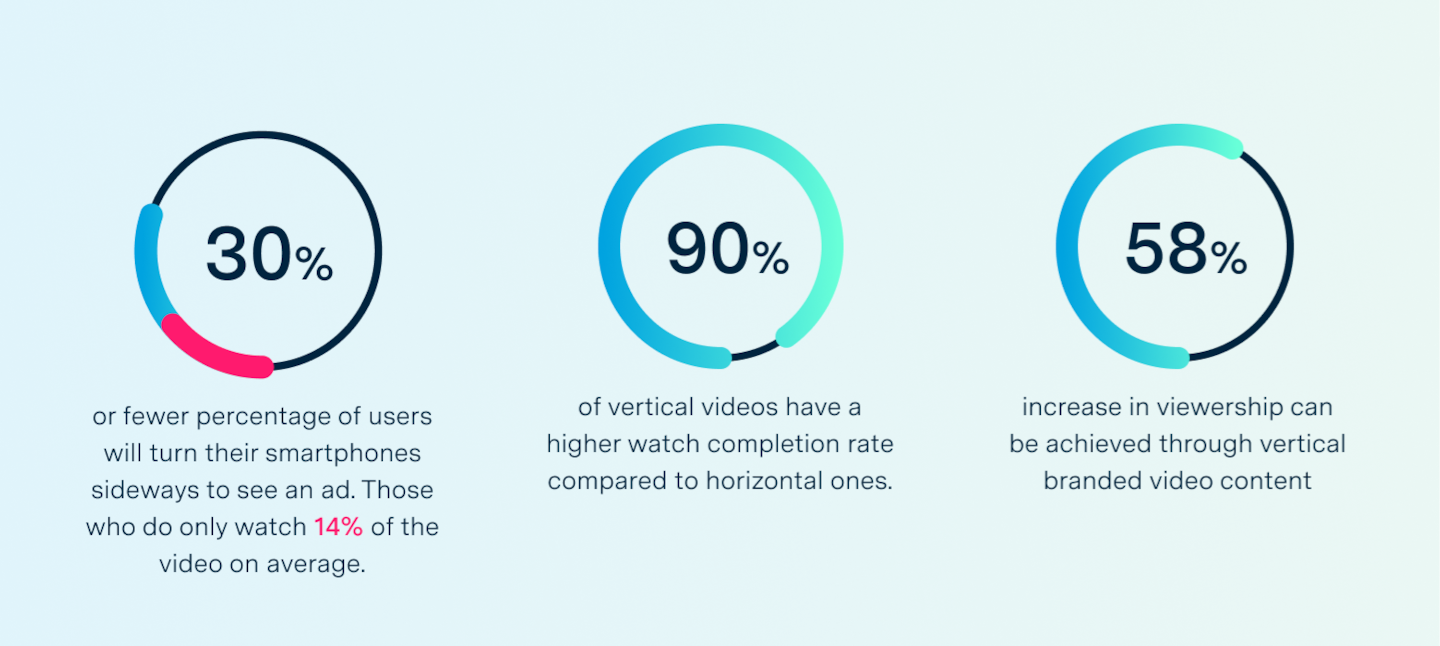
Vertical video engagement is higher in part because of the applications that are built around it. The thumb space vertical video provides makes a natural inclination to engage with the video more deeply through commenting, sharing or viewing the caption, which is a feature younger generation users tend to frequently use.
In terms of advertising, because vertical video works well for consumers, it presents a significant opportunity for branded content, leading brands to increase production of content in this format to match their target audience’s preferred application. For media organizations who rely on advertising revenues, vertical video presents a significant opportunity and subsequently the need for an associated advertising strategy within their broader mobile strategy.
How to leverage vertical video
Taking advantage of the growth and opportunity that exists with vertical video means having native content created specifically for the format. This requires internally understanding the distribution channels well, knowing the users of the platforms, and making content that’s going to be applicable and of interest to them. What’s more, using this format requires engaging talent familiar with the trends, requirements, and restrictions of vertical video-based platforms.
That said, it isn’t easy to repurpose content for vertical video from other platforms. Today, it’s difficult to consolidate video workflows and say, “Out of my main video content, I’ll also make this vertical video.” To that end, Arc XP is working to make this easier for our customers.
Arc XP’s integrated video CMS allows content creators to tag their videos to be different orientations. Having separate videos allows better tracking of engagement by format, and allows the vertical video to be cached better. On the display side, Arc XP’s video player can be configured in our PageBuilder no-code experience builder with configuration options for mobile users to get vertical video, allowing for an optimal experience.
Trend #2: The rise of third-party cookie alternatives
Third-party cookies were never designed for what they’re mainly being used for today – retargeting. The deprecation of the third-party cookie as we know it will spark significant changes for the organizations who have built revenue streams on top of those cookies, particularly in how advertisers target their audiences. This inevitability has accelerated trends towards both zero-party, first party, and second-party data.
What is zero-party data?
Zero-party data is considered the highest quality data. It is data not inferred from a user’s behavior but has been directly and willingly provided to you by that individual. It is difficult to reproduce programmatically from other sources and it is an asset that belongs to your organization.
What is first party data?
First-party data is very similar in that it can be inferred through analytics. This inference may make first-party data sound like third-party data, but the key difference is that first-party data is gathered directly from a user’s behavior on your owned channels – your website, your app, social channels, etc. The important fact is that you can confirm the method by which data inferences were made.
What is second-party data?
Just because retargeting from third-party cookies is going away, it doesn’t mean that you can’t build profiles for your users that are shared with partner companies. Building up these profiles requires data that’s difficult to reproduce programmatically from other sources. This is where second-party data comes in.
Second-party data is zero-party and first party data an organization shares, with user consent, through an agreement with a partner organization. Organization’s pair this second-party data with their own zero-party and first-party data to build more robust and accurate user-consented profiles. Examples of this are relationships between a publisher and key partners like email providers or podcast vendors.
Why do these data types matter?
Publishers with a wealth of first-party data will have more opportunities to effectively monetize their content. They’re able to advertise to users much more successfully because their profiles are better than before.
“Today’s youngest consumers prefer personalized advertising. The faster that you can get to that path of zero- and first-party data, data sharing with trusted second parties, and then begin building segments for your audience and personalizing their advertising, the happier they’ll be.”
— Arc XP's chief technology officer, Matt Monahan, on the shift towards first-party data being a key ingredient to building the platforms of tomorrow.
Tied together with what’s going to be necessary for digital subscription distribution in the future, at Arc XP we foresee that there’s going to be a strong need for bundling – bundling subscriptions, bundling OTT offerings, and content syndication. As that takes place, the natural companion will be second-party data agreements where organizations can share their zero-party and first-party data with their partners and build more robust profiles of your shared audience. For organizations with zero-party and first party data strategies, the licensing of user-consented data as second-party data introduces a vital new revenue stream.

The use of second-party data in this manner isn’t necessarily a nascent trend. Companies that are affirmatively getting their users consent to share data and build more robust profiles with their partners is well underway. Moreover, companies are increasingly adopting first-party data exclusively. It’s not because they’re forced to with the impending deprecation of third-party cookies, they’re doing it because the quality of data is better. This is all building toward the idea of contextual targeting.
If these alternatives to the third-party cookie aren’t being discussed amongst your advertising team today, we recommend that those conversations start happening very soon. Based on their own reporting, consumers, especially among younger audiences, prefer personalized advertising. The faster that organizations can get to the path of zero-party and first party data, sharing data with trusted second parties, and then begin to build audience segments and personalizing advertising for those segments, the more relevant users will find the associated advertising, the more seamless content will feel overall, and the better the experience users will have across all an organization’s channels.
How to get started building richer profiles with zero-party and first party data
For mature media organizations, many of them have their data gathering and activation strategy in place and are off to the races. For those organizations just starting to think about alternatives to third-party data, the key to activating a first party data strategy is to start simple. If you’re not actively promoting user registration on your site and gathering first-party data, do that first. Begin with getting a user identity platform, like Arc XP Subscriptions’ identity in place while you work towards building your strategy.
Arc XP Identity and Subscriptions offering provides a wide set of tools for customer to start or accelerate their journey. We have our own “out of the box” identity options, but also allow integration to other CDPs or user information platforms via our powerful integration framework (IFX). Our content access tools make it easy to build targeted registration and paywall experiences, leveraging customer data to deliver personalized activations. Customers can implement progressive profiling quickly, thanks to a more robust Identity profile manager app and a pre-built experience “block” to implement a zero party data collection strategy.
Trend #3: Harnessing artificial intelligence
Part of the reason there is so much investment in artificial intelligence (AI) is because people are anticipating that this might actually be the breakthrough that makes key business workflows easier. In the grand ecosystem of AI, ChatGPT and other large language models (LLM) are AI transformer models that lie within the subset of machine learning and are specially trained on very large data sets.
From a text authoring perspective, LLMs like ChatGPT can create great initial drafts but it’s highly recommended that organizations do not publish AI-generated content without the human element of reviewing and refining it. What this means for media organizations is that LLM transformer models can allow journalists and editors to use a draft to get started quickly, avoid “writers block” and spend their time refining and adding their own spin on topics rather than trying to figure out how to get started.
The quality of AI-generated content will increase aggressively and exponentially, but not at the speed of adoption or growth in competition. As we move toward 2025, we can expect AI that can draft content that’s better than your human average. That doesn’t mean it’s going to write better than a trained journalist, but it does mean that a journalist with AI assistance will be much more efficient than a journalist operating without that assistance.
How will AI affect news journalism?
The reason LLMs like ChatGPT have gotten so good is because there’s a lot of training content going into them. They’re accessing trillions of webpages and individual pieces of content. But when it comes to the underlying data, it looks a lot like the world we see with search and internet infrastructure, with a lot of consolidation and the benefits flowing to a couple of large players.
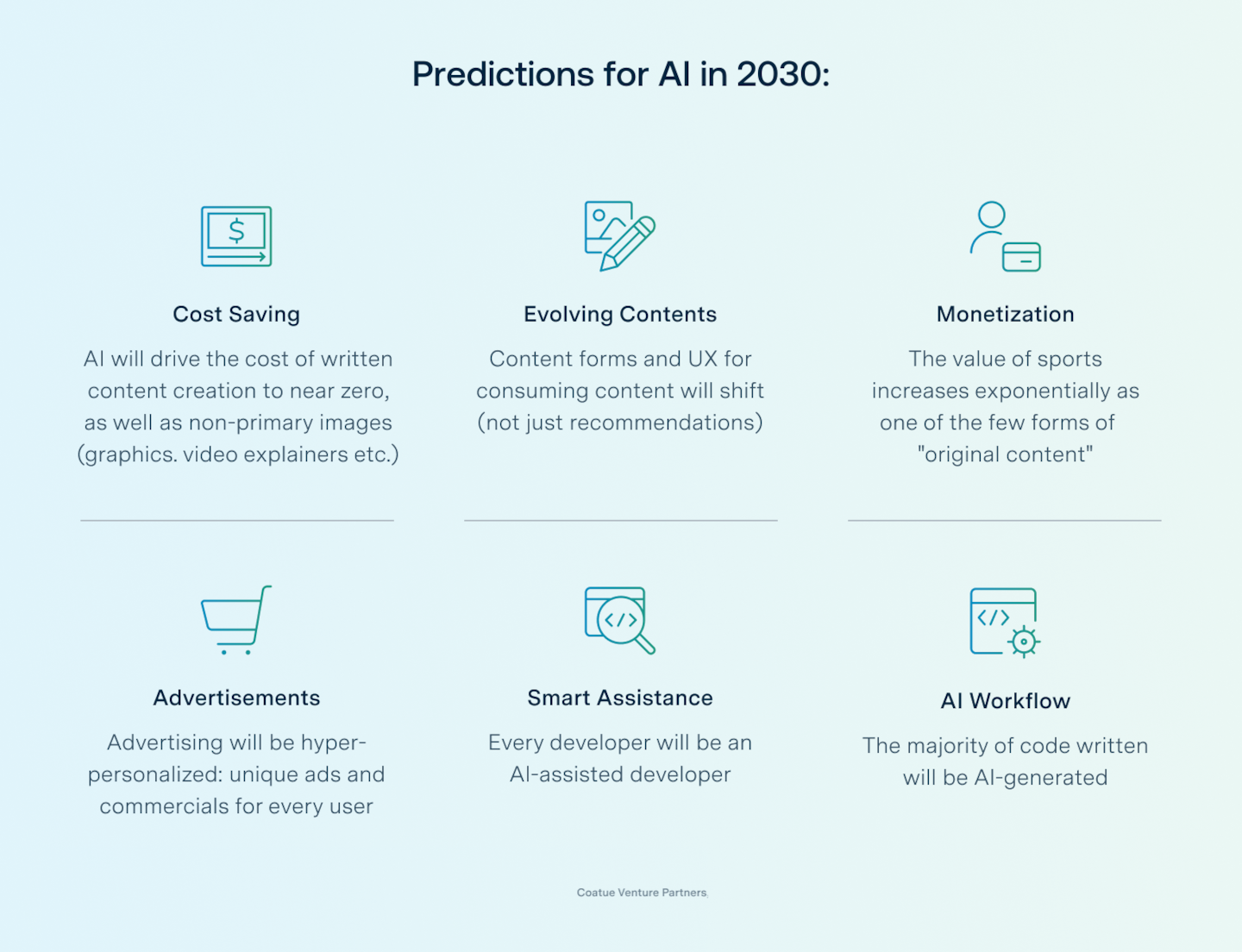
At our recent user conference, Arc XP Connect, Matt Monahan, chief technology officer of Arc XP stated in his opening keynote, “Over the next five to seven years, the cost to produce written content is going to be driven to almost zero. Even things like writing a story in a particular tone, or from the perspective of a specific personality, are on the path to being automated already.”
What will come to pass is that the process of creating written content is going to be less important and easier to automate. With the very real risks of misinformation and fake news, content origin is going to become important AI-generated work needs to be verified for authenticity and accuracy.
How will AI affect advertising?
When it comes to advertising creative and AI, everything’s on the table. Advertising will get hyper-personalized. Combining first party data with the ability to automatically create ads is going to become important. There are no rules against automatically creating ads for display, or a video, personalized to each user. And that capability will be available fairly soon.
How will AI affect developers?
Within a few years, every developer will be an AI-assisted developer. Think about the routine workload of a developer – setting up a new class file, setting up a project, adding libraries to your project. Most of the major ITEs that developers use are going to begin incorporating this technology right away. By 2030, it is likely that the majority of the code will actually be AI-generated.
Pairing AI with your first party data strategy
What’s missing today is an industry solution for how media organizations think about what’s actually theirs and what’s important to them. How are they going to ensure the content gets linked back to or gets attributed to their organization? Content origin and brand trust is going to become increasingly important. There are the risks of misinformation and fake news, and technology purveyors are pretty much powerless to stop it.
Consumers want to know where information comes from. If you can build a good model for the large model providers to latch onto and use in what they’re building, you can help solve this for the industry. Partnering with some of the prominent AI providers in the space, Arc XP is working on these solutions right now, specifically with additional models for personalization, curation, and automation. In addition to what Arc XP provides today, there’s real work happening to automate workflows.
AI is arguably the biggest transformation that has happened in technology in recent memory. Arc XP is building on that excitement and building platforms for what this future will be. Well under way, we are developing and deploying AI-assisted features including:
- Video thumbnail suggestions, which ease a common workflow challenge for promoting videos.
- Working with partners and our own tools for analysis and generative AI in content authoring.
- Actively developing a flexible framework for allowing our customers to integrate their own AI models into their content pipelines to ensure they are able to have both flexibility and choice in how they adopt AI-assisted workflows.
The next wave of AI is going to be pretty transformational. Those broadcast and media organizations that start exploring AI technologies now will quickly become a strong player in the space, but it’s going to require agility and adaptation.
Stay tuned for more on how Arc XP is approaching vertical video, alternatives to the usage of third-party cookies, and generative AI as well as new trends that we continue track.
Recent resources


