Inside the Lab: How Arc XP Is Building the Future of Audience Engagement
Arc XP’s latest webinar went “inside the lab” to show how our teams are shaping the next era of AI-driven digital news experiences—ones that are adaptive, predictive, and rooted in trust.
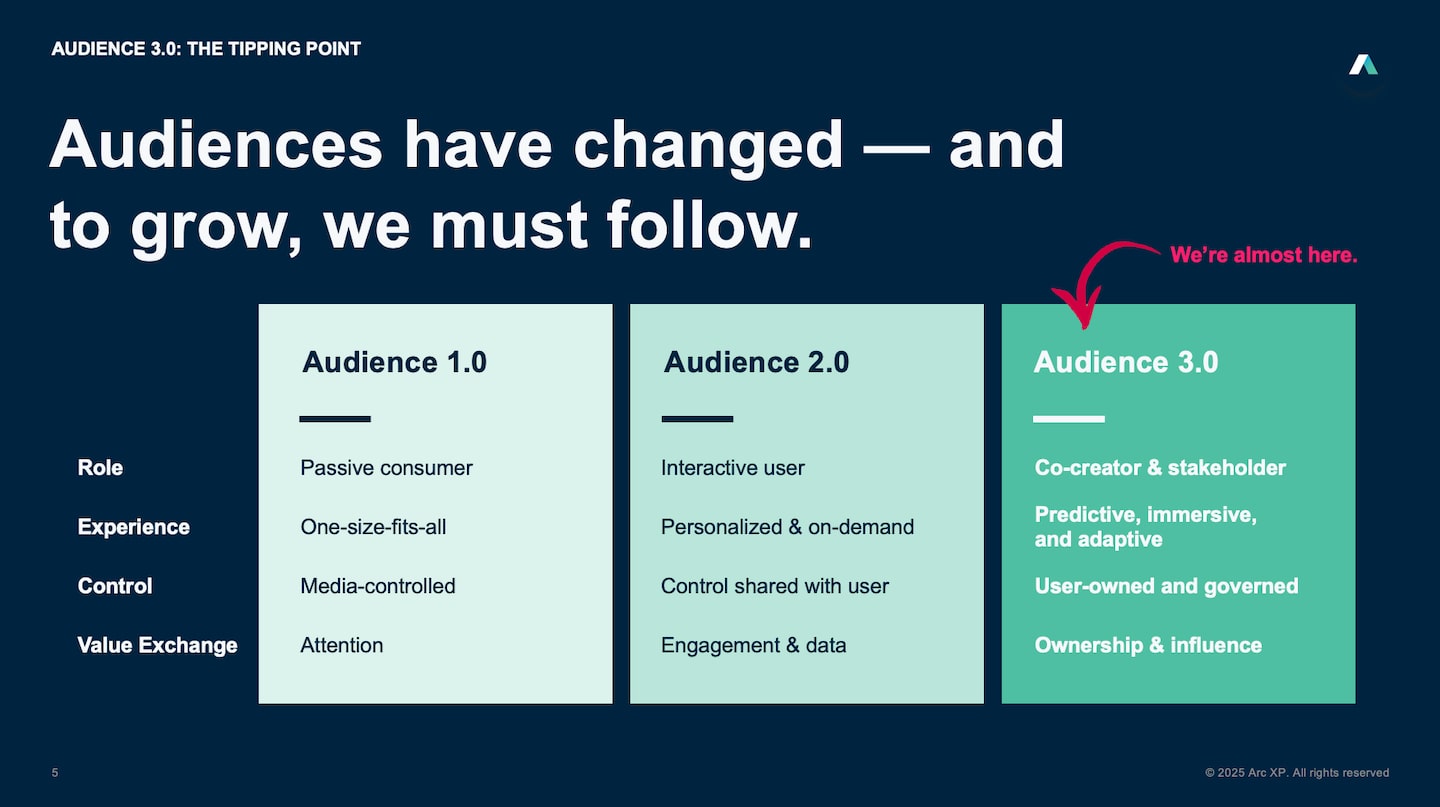
Arc XP’s CTO, Joe Croney, opened with the challenges facing every publisher right now: direct traffic is slipping, AI answer engines are intercepting readers, and audiences expect interactive, personalized storytelling as part of the industry shift toward Audience 3.0. A quick poll showed most attendees sit around “Audience 2.0”—some personalization, but not yet the fully adaptive “Audience 3.0” model that today’s readers demand. The next wave of growth, Joe noted, will come from experience AI, not just workflow efficiency.
Ask The News: Turning your journalism into trusted answers
Timecode: 12:25
Joey Marburger, VP of Content Intelligence, unveiled Ask The News, a reader Q&A experience powered by Arc XP Intelligence. Built on retrieval-augmented generation (RAG) and Arc XP’s native vector database, it lets audiences ask natural-language questions and get verified answers drawn directly from your reporting.
Unlike generic AI tools, Ask The News pulls from your content, re-ranking and verifying before responding, then linking readers to the original stories. It’s also purpose-built for media, and includes built-in ethical guardrails that media companies need to preserve trust. For example, if there’s no solid answer, it offers related coverage rather than guessing.
The result? Deeper discovery, stronger engagement, and new insight into what readers want to know next.
“For You”: Hyper-personalization, newsroom-style
Timecode: 35:50
Mike Holland, VP of Content Platform, shared Arc XP’s next big project: For You, a configurable personalized recommendations engine that puts editors, not algorithms, at the wheel.
For You combines the power of vectorized content with first-party data capture — letting teams quickly create and test personalization rules and recommendation profiles without coding. Anonymous visitors see dynamic updates based on time, location, or browsing behavior, while registered users get truly personalized feeds powered by advanced vector models.
It’s personalization that adapts fast, respects editorial judgment, and keeps readers engaged longer.
Collaboration is the new innovation
Both Joey and Mike emphasized how AI is pulling teams closer together– not replacing people – but sparking new cross-functional problem-solving between product, engineering, and editorial. So what’s next? Start auditing your archives, set your personalization guardrails, and get ready to experiment. The future of media belongs to publishers who combine human storytelling with intelligent, adaptive technology.
“Workflow AI made us faster. Experience AI will make us unforgettable.”
Recent resources


