From AI Pilots to Real Transformation: How Media Leaders Will Build Durable Advantage in 2026
As 2025 comes to a close, media organizations face a defining question: how do we move beyond experimentation and into meaningful, durable transformation?
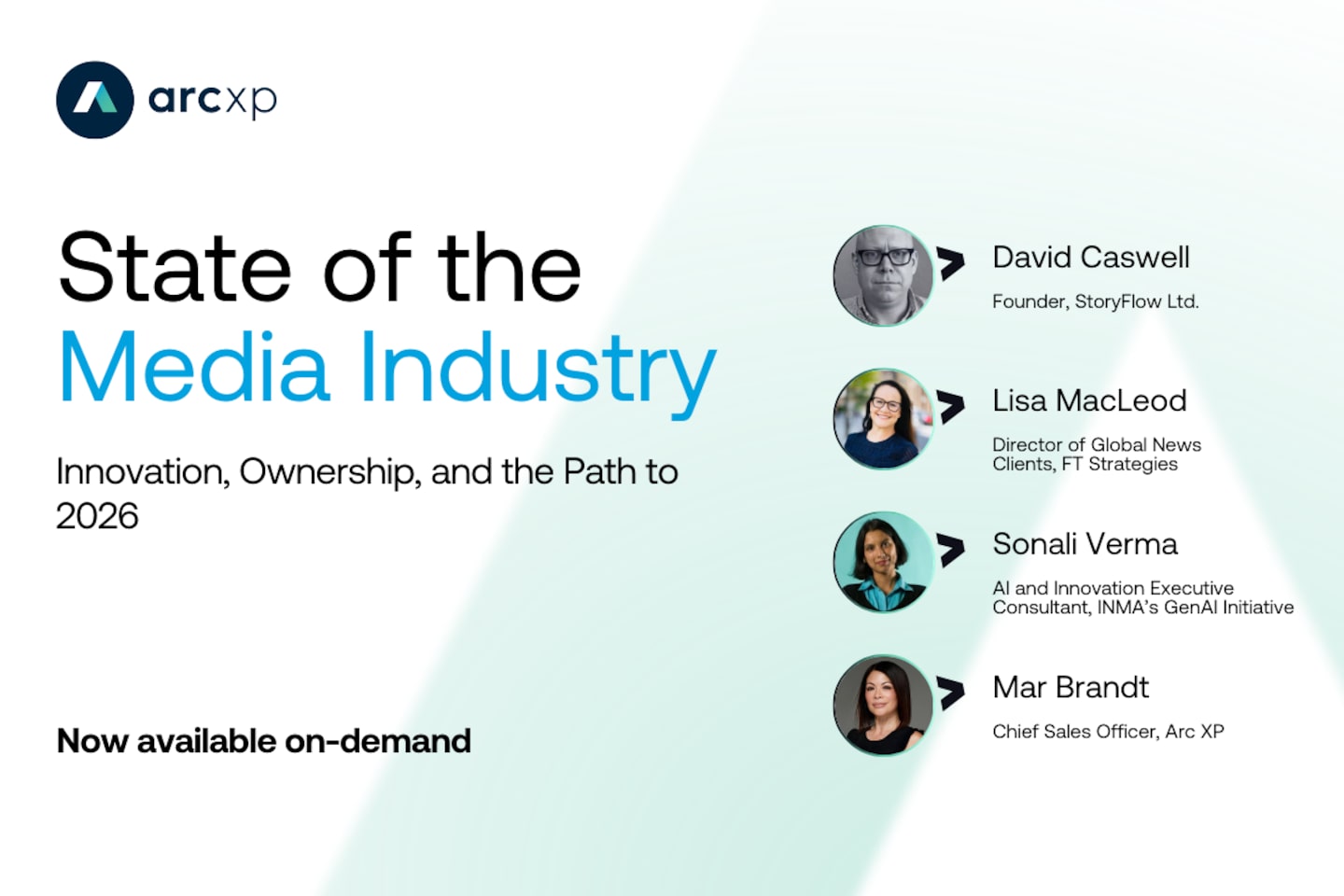
That question was the conversation driver for our recent State of The Media Industry webinar featuring insights from David Caswell, Lisa MacLeod, and Sonali Vurma — leaders at the intersection of journalism, product, and AI strategy. Their message was clear: success in AI in media transformation won’t be won by chasing tools, but by rethinking systems, culture, and audience value.
Below are the key takeaways every media leader should carry into 2026.
1. Transformation Is About People — Not Just Technology
A recurring theme throughout the discussion was the industry’s tendency to over-index on technology while underestimating the role of people and culture.
AI does not create transformation on its own. Without education, trust, and staff buy-in, even the most advanced tools fail to deliver impact. Fear around generative AI in journalism often stems from a lack of understanding rather than real risk. Leaders who invest in internal education and hands-on experimentation are better positioned to move from hesitation to momentum.
The takeaway: Media organizations that win will treat AI adoption in newsrooms as a change-management challenge, not a software rollout.
2. Stop Automating Tasks. Start Automating Workflows.
Many organizations are still evaluating AI based on narrow use cases like summarization or transcription. According to the panel, this is where urgency gets lost.
Today’s most powerful systems are agentic, capable of orchestrating complex, multi-step workflows that span research, analysis, and production. This shift toward AI workflow automation for publishers is what separates experimentation from real operational change.
The takeaway: Moving from task automation to workflow automation is where AI shifts from efficiency gains to durable strategic advantage.
3. Differentiation Is No Longer Optional, It’s Existential
In a world flooded with “good enough” content, differentiation is becoming the defining survival strategy.
The panel described a growing barbell effect: high-end, exclusive journalism on one end; high-volume, low-cost content on the other. Mid-tier publishers are increasingly squeezed unless they can clearly articulate what makes them unique.
True differentiation comes from:
- Physical reporting and real-world relationships
- Deep, qualitative audience understanding
- Trust, transparency, and editorial credibility
These are advantages AI cannot easily replicate.
The takeaway: Sustainable value lies in what only your organization can produce, not what AI can generate anywhere.
4. AI Creates Advantage When It Serves Real Audience Needs
The most compelling examples of AI success shared during the webinar weren’t flashy, they were deeply practical.
One standout case showed how AI-driven summaries, built directly from audience insight, significantly increased engagement, reduced churn, and even drove new subscriptions. This is where a strong AI strategy for media companies becomes tangible: when technology is deployed in service of a real audience problem.
This reframes the core question from:
“How will audiences find our content?”to“How can we uniquely serve our audience better than anyone else?”
The takeaway: Strategy-led AI beats FOMO-driven adoption every time.
5. “Liquid Content” Is Reshaping the Content Experience
AI has removed many of the historic constraints around format and distribution. Content can now move fluidly across text, audio, video, and interactive experiences without requiring entirely separate teams.
This unlocks:
- Broader reach across audience preferences
- Faster experimentation with formats
- Richer first-party data and feedback loops
The takeaway: As media industry AI trends for 2026 continue to evolve, the future belongs to organizations that design content for adaptability, not a single channel.
6. Technical Readiness Is a Strategic Imperative
Even the most ambitious AI strategies will stall without a strong technical foundation. The panel emphasized the urgent need to modernize:
- CMS structures
- Metadata practices
- Content workflows
- Distribution systems
AI magnifies the strengths and weaknesses of existing infrastructure.
The takeaway: Getting your tech stack “in order” isn’t a backend project; it’s a growth strategy.
7. Culture, Vision, and Trust Will Separate Winners From Survivors
Finally, the conversation returned to leadership.
The organizations best positioned for 2026 are those that:
- Democratize AI knowledge across teams
- Encourage experimentation without fear
- Articulate a credible, optimistic vision for the future
- Embrace systems thinking over siloed execution
As one panelist put it: culture follows clarity.
The takeaway: Teams move faster when they believe where they’re going, not just what they’re building.
Looking Ahead: What Winning Media Companies Will Do in 2026
In a closing rapid-fire, the panelists summed it up simply:
- Embrace complexity — transformation isn’t quick or easy
- Fix the foundations — technical readiness is non-negotiable
- Deliver step-change value — not incremental efficiency
AI is ready. The question is whether organizations are.
Recent resources