How The Washington Post Is Reinventing Media for an AI-First, Audience-Driven Future

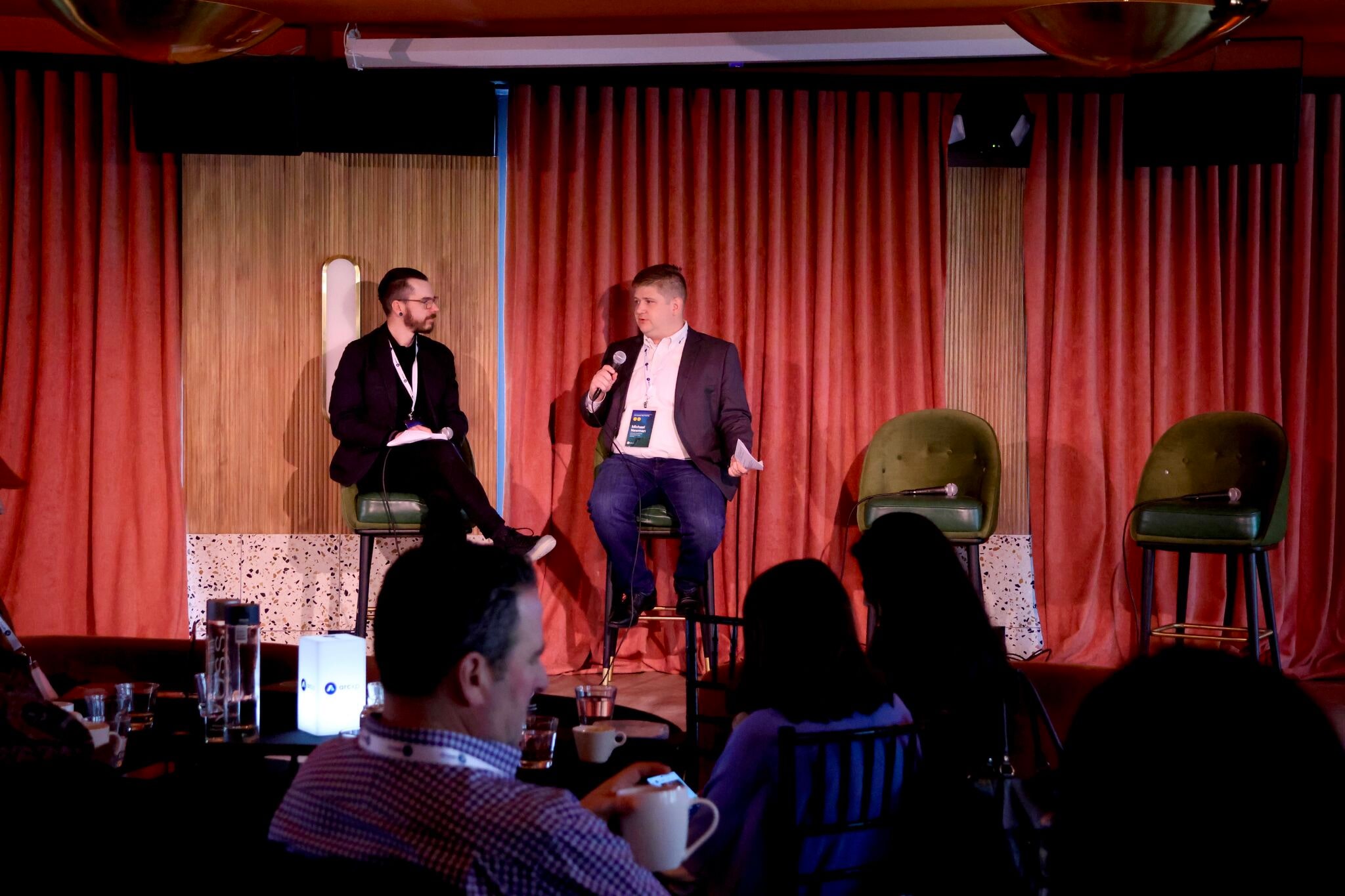
In a fireside conversation, Vineet Khosla, Chief Technology Officer, and Anjali Iyer, Global Head of Subscription, unpacked how The Post is reinventing itself as both a trusted global news brand and a digital business built for the future. Their message was clear: media transformation is about deeply understanding how audiences discover, consume, and pay for journalism today.
What emerged was a blueprint for audience-first innovation that connects technology, product, and revenue in a way many media organizations are still striving to achieve.
Why digital transformation in media is needed
According to Iyer, traditional revenue inputs have fundamentally changed. Trust is harder to earn, attention is fragmented, and discovery paths that once drove scale, especially search, are declining. At the same time, privacy regulations and the deprecation of third-party cookies are accelerating the need for stronger first-party relationships.
Khosla added a critical reframing: every major technological shift changes how news is created, distributed, or consumed. AI is different because consumption changed first. “Overnight, people started asking questions and creating their own versions of the news. We didn’t catch up in time and that’s the challenge.”
The result is a widening gap between how news has traditionally been produced and how audiences now expect to experience it.
From broadcast thinking to personalized journeys
As Khosla put it bluntly: “Broadcast is dead. One article for 100 million people doesn’t work anymore.”
In an AI-first world, personalization is no longer just about recommending articles. It’s about enabling a journey.
Khosla described a future where journalism serves as a grounding layer — the trusted, factual foundation — while AI allows each reader to explore stories on their own terms. Articles become starting points, not endpoints.
Readers can ask follow-up questions, seek clarification, and go deeper based on their own curiosity. The experience adapts to them, not the other way around.
“It’s unrealistic to assume 100 million people read the same article and have no questions. Personalization means letting the audience explore, not forcing them into a single narrative path.”
This shift preserves editorial integrity while meeting modern expectations for relevance, context, and control.
“Audience-first” doesn’t mean “journalism-last”
A common fear in media is that personalization and AI dilute journalistic standards. The Post takes the opposite view.
The newsroom’s reporting remains the source of truth. AI does not replace journalism, it amplifies its value by making it more accessible, explainable, and useful to different audiences.
Trust, in this model, is not lost. It’s transferred from the masthead alone to the experience built around it.
The goal of reinvention, as Iyer described it, is simple but demanding: “Walk in tandem with the customer and the technology. Don’t fall behind.”
Rethinking revenue through choice and flexibility
Reinvention doesn’t stop at product, it fundamentally changes how media companies monetize.
Instead of forcing audiences into a binary choice between “subscribe or leave,” The Washington Post is expanding its revenue model to reflect how people actually want to engage.
At the foundation is reach and discovery, meeting audiences where they are and bringing them back into owned experiences. From there, The Post offers multiple paths:
- Flexible access, including article-level or time-based options
- Traditional subscriptions, with varying benefits
- Premium and intelligence products, such as WP Intelligence, for deeper engagement
- B2B and enterprise offerings, including higher education and licensing
This diversified approach recognizes a simple truth: not every reader wants the same relationship with a news brand and that’s okay.
“If you give customers a real choice, you don’t have to force value. They discover it themselves.”
How first-party data powers smarter monetization
As third-party cookies fade, first-party data becomes the connective tissue between experience and revenue.
The Post is actively testing how behavioral signals, engagement patterns, and intent can inform which offers are shown to which users, from flexible access to premium products.
Rather than static paywalls, the future is intelligent access: systems that adapt based on likelihood to subscribe, willingness to pay, and long-term value.
This approach doesn’t just improve acquisition. It strengthens retention by aligning expectations with actual usage — a critical factor given that a significant share of subscribers cancel within weeks if the value doesn’t match the promise.
AI as a platform, not a point solution
When asked how The Post decides where to invest in AI, Khosla emphasized platform over projects.
Instead of centralizing AI within a single team, The Post focused first on building a scalable foundation by making AI cheap, accessible, and safe for teams across the organization to experiment.
Journalists, product teams, and growth leaders are empowered to test ideas, solve real problems, and learn quickly. Some initiatives succeed. Many fail. That’s expected. “If everything works, something is wrong.”
The real return on AI, Khosla argued, won’t always show up in traditional ROI metrics. Its greatest value lies in enabling entirely new capabilities, just as mobile phones enabled products no one could have predicted at the time.
Apps, habits, and direct relationships
As discovery becomes more fragmented, direct relationships matter more than ever.
For The Post, apps play a critical role in building habits, offering differentiated features like conversational AI, voice interactions, and richer personalization that aren’t possible on the open web alone.
The website remains essential for reach and anonymous discovery. But the app is where loyalty deepens. “When people come to your app, you have a chance to build a relationship, not just a visit.”
Reinvention is a continuous commitment
Looking ahead, Iyer shared what success would look like a year from now: proof that bold bets paid off, that customer-led decisions outperformed industry defaults, and that innovation reflected the future, not the past.
The Washington Post’s story is not about having all the answers. It’s about building the systems, culture, and mindset to keep learning alongside its audience.
At a time when many media organizations feel stuck between legacy models and uncertain futures, that may be the most important lesson of all.
Recent resources