How Graham Media Group Uses Generative AI to Power Modern Newsroom Workflows
Insights from Arc XP Connect NYC
Graham Media Group (GMG) is comprised of seven local media powerhouses, along with Graham Digital, Omne, and Social News Desk, all delivering local news, programming, advertising solutions, and digital media tools across television, online, mobile, streaming, podcasts, and audio devices.
While deeply rooted in broadcast television, GMG operates today as a collection of dynamic, local brands that extend well beyond traditional linear channels. Its work focuses on informing, celebrating, and knitting together the communities it serves, wherever audiences choose to engage.
That evolution has required more than new platforms. It has demanded new workflows, new infrastructure, and increasingly, new ways of working with technology.
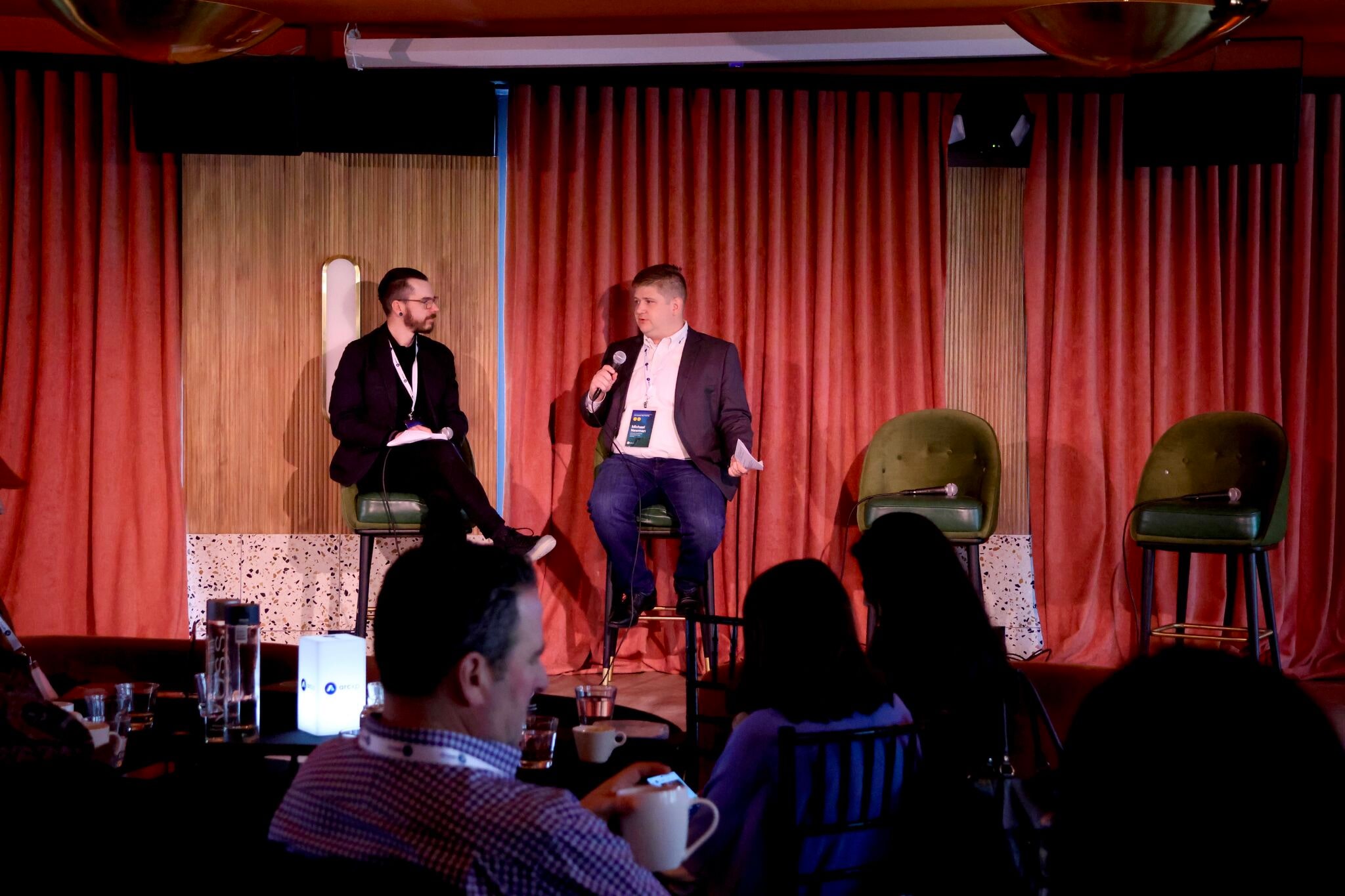
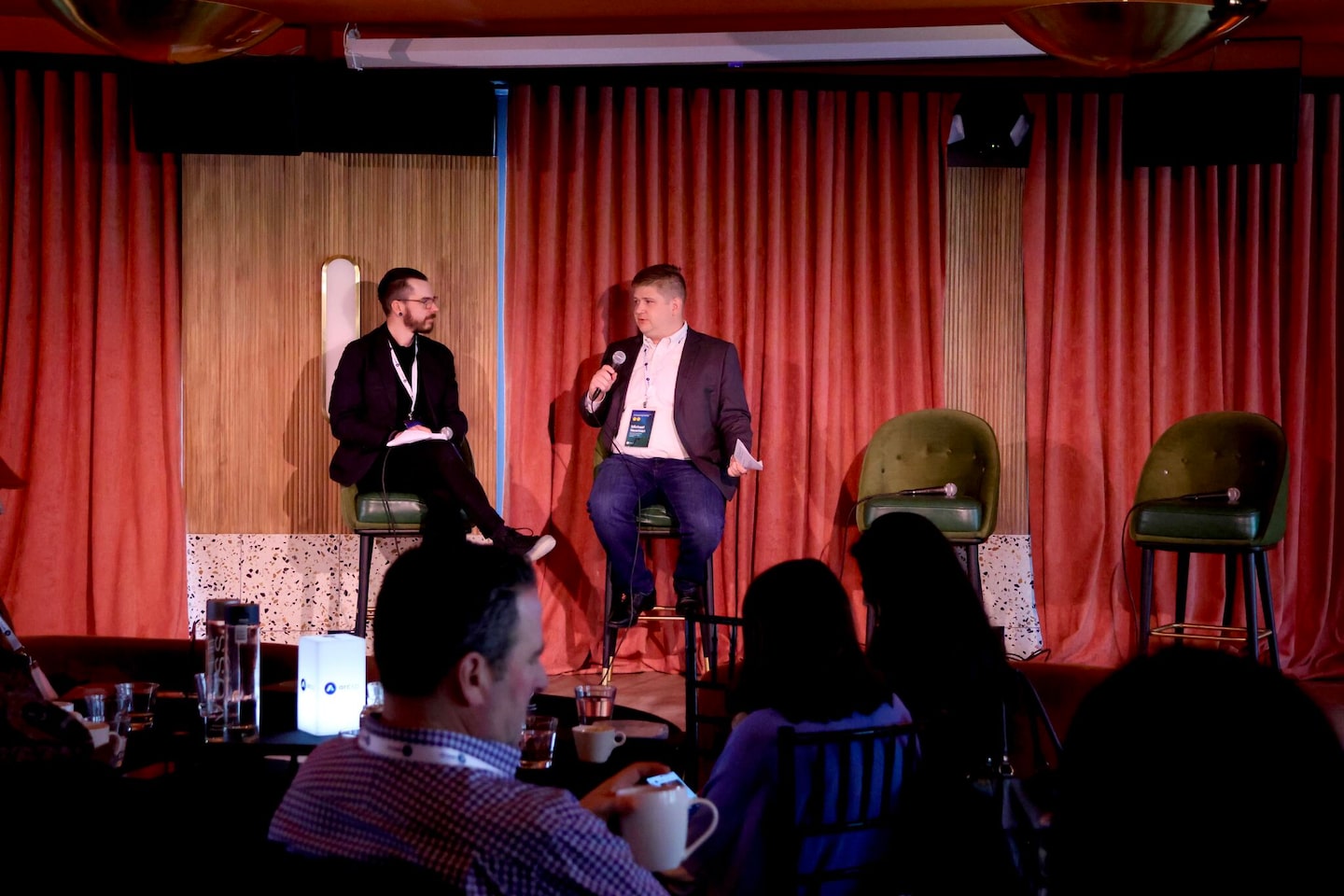
At Arc XP Connect NYC, Michael Newman, Director of Transformation at Graham Media Group, sat down with Joey Marburger, VP of Artificial Intelligence at Arc XP, to share how GMG is applying generative AI in practical, day-to-day engineering, product, and newsroom workflows.
A digital-first foundation built before the AI Wave
Long before generative AI entered the mainstream conversation, Graham Media Group was already adapting to the realities of a digital-first media landscape.
Like many broadcasters, GMG expanded its content strategy beyond traditional television to include online, OTT, mobile apps, podcasts, and emerging audio platforms. But growing demand for live streaming revealed the limitations of legacy broadcast infrastructure, particularly the expense and rigidity of traditional live production equipment.
In early 2019, Graham Digital partnered with Arc XP to transition GMG’s video platform to Arc XP Video Center, a broadcast-grade video streaming platform built on AWS. The move enabled seamless live video delivery across platforms, while introducing automated workflows that allowed affiliate stations to quickly cut and publish live video to the web, mobile, social, and OTT.
That partnership also led to the development of Broadcast, a first of it’s kind native mobile app that allows journalists to stream high-quality live video directly from their phones to over-the-air broadcasts, station websites, and social platforms, removing many of the physical and financial barriers of traditional live broadcasting.
This early emphasis on flexible, scalable infrastructure later proved critical as generative AI tools matured.
Why generative AI resonated inside the newsroom
According to Newman, generative AI arrived at a moment when newsroom pressure was already intensifying.
“Our audience expects more from us as broadcasters,” he explained. “We got really good at doing the breaking news at 4:30 every single day and making a lot of money doing that—that’s not the case anymore. The audience really doesn’t like that breaking news format. We had the very real conversation about where people are getting their news and information today. As a traditional broadcast TV publisher, how do we do that? How do we serve that audience?”
The answer was asking reporters and producers to create more content, for more platforms, at greater speed, while maintaining trust and editorial quality. “That’s what it really comes down to,” Newman said. “Having our reporters producing more content, doing it more quickly.”
Generative AI emerged as a way to relieve that time pressure, not by replacing journalism, but by supporting it, particularly in early-stage tasks like drafting and formatting. “It’s actually really good at taking a news transcript or script and turning it into a written article,” Newman noted. “It’s good at doing that first draft.”
Adoption over perfection: Building trust with AI
Rather than mandating usage, Graham Media Group focused on making AI tools accessible and useful within existing workflows. Adoption quickly became a key signal of value.
Newman observed that newsroom reactions to AI often fall into two camps.
“There are people who go into an AI tool, type their first prompt, get a response back, and say, ‘Oh, that’s garbage. AI is not for me,’” he said. “And then there are people who spend 15 minutes with it, asking follow-up questions, being more specific. Those people always tend to find a solution they can work into their workflows.”
Journalists, he argued, are uniquely well-positioned to be effective AI users.
“We should be the best AI users out there,” Newman said. “You know what’s good, you know what’s bad, and AI really needs that input.”
Instead of measuring success solely through traditional ROI metrics, GMG tracked adoption and outcomes: whether people were using the tools and whether those tools were helping them produce real work.
One standout example came from an internal AI platform that allowed employees to build their own applications. A producer at one of GMG’s stations independently created a headline optimization tool, which quickly spread across all seven stations.
“He did such a good job putting his knowledge into the assistant,” Newman said, “that it got picked up organically across all seven of our TV stations.”
Generative AI across the end-to-end news workflow
At Graham Media Group, AI is not confined to a single task or team. Instead, it supports the full lifecycle of content creation and distribution.
- Story ideation and pitching: AI helps reporters complete structured pitch forms and enhances live pitch meetings by recommending additional formats.
“We’re recording that pitch, and the AI is providing recommendations,” Newman explained. “‘This should be on Instagram.’ ‘You forgot a web piece.’ ‘You might want a vertical video here.’”
- Research and reporting: Tools like Perplexity and NotebookLM support deep investigative work by summarizing long documents and background materials.
A reporter recently assigned to cover The Villages in Florida used NotebookLM to prepare on the drive to the assignment.
“He was able to listen to a podcast produced from all that source material on the drive,” Newman said, “and hit the ground with more knowledge than any other reporter in the market.”
- Verification and editorial review: AI assists in identifying statements of fact and highlighting where verification may be missing, allowing human editors to step in when needed.
“AI is really good at identifying where there’s a statement of fact and where the verification is,” Newman noted. “Then a human can come in and say, ‘There’s a gap there.’”
- Distribution and audience feedback: Starting with video, GMG uses AI to rapidly create multiplatform versions of content. AI is also used to analyze audience comments and surface story ideas.
“What a great use of comments,” Newman said. “Now I’m getting emails from reporters saying, ‘That story originated from customer feedback that AI was able to identify.’”
Staying focused amid rapid change
With new AI tools emerging constantly, Newman emphasized the importance of staying grounded in workflows rather than features.
“It’s like drinking from a fire hose,” he admitted. “As a technologist, it’s exciting, but it’s overwhelming.” The solution, he said, is to reduce complexity for teams by focusing on how work actually gets done.
“In every presentation, I’m showing a workflow,” Newman explained. “Not just a tool, but a workflow that solves a problem.” That focus helps keep experimentation productive and aligned with audience needs.
Recent resources