Introducing the AI Assistant in Composer: Built-In Editorial & Quality Checks, As You Write
In today’s newsrooms, speed is non-negotiable. But too often, copy edits, quality checks, metadata cleanup, and style enforcement slow teams down or happen too late in the process.
That’s why we’re excited to introduce the AI Assistant in Composer — a native, workflow-aware assistant that helps every story meet your standards automatically and earlier. It reduces rework, speeds up publishing, and preserves editorial trust.
The AI Assistant supports authors at the point of creation, acting like an automated first-pass review that runs quietly in the background — transparent, configurable to your standards, and always keeping humans in the loop.
Supporting Three Core Editorial Workflows
The AI Assistant focuses on three high-impact moments in the editorial workflow, where small improvements early can save significant time later.
Metadata Review
Strong metadata is critical for discoverability, recirculation, and performance — but it’s often rushed or fixed late.
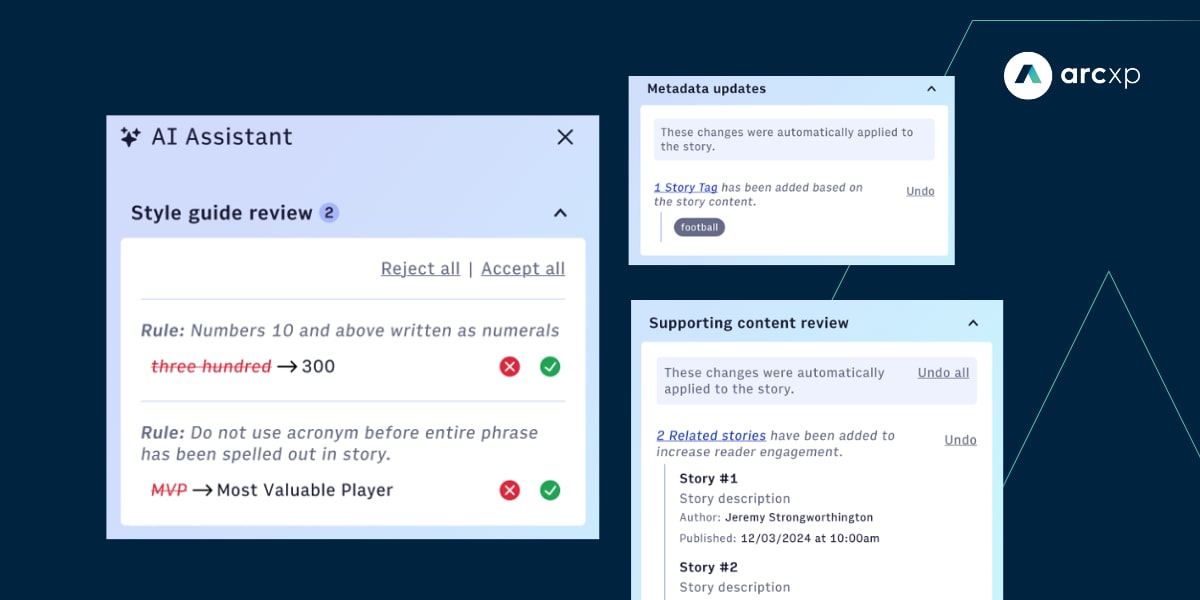
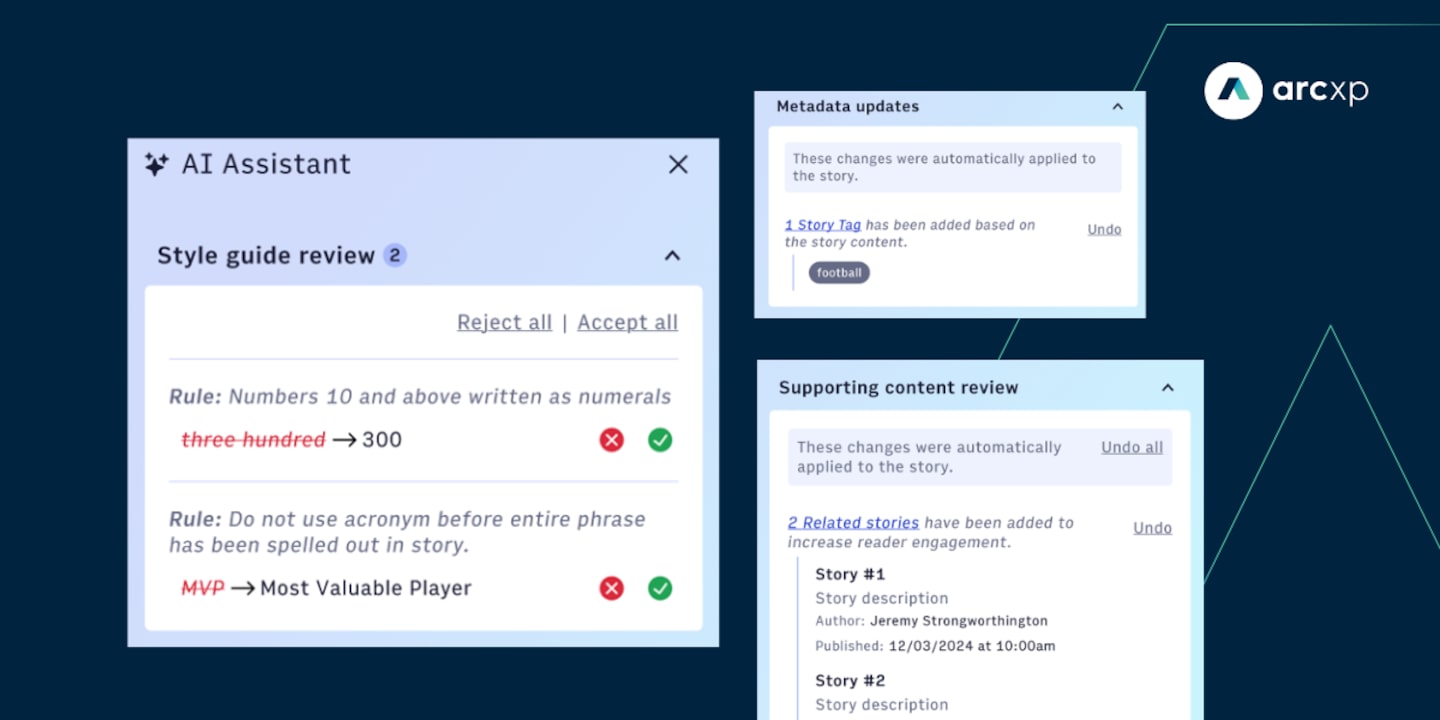
The AI Assistant automatically reviews and enhances story metadata (including headlines, tags, SEO keywords, and descriptions) to help stories perform better across platforms. It proactively surfaces metadata and tagging improvements so teams can strengthen SEO and structure without adding manual steps or slowing down production.
To maintain transparency and trust:
- AI activity is clearly indicated when edits are being made
- All AI-suggested changes are explicitly labeled
- Editors and authors remain in full control of what’s accepted or rejected
Style Guide Suggestions
The AI Assistant also provides editorial and stylistic suggestions aligned to your organization’s writing standards — flagging issues that break editorial rules, surfacing style and clarity opportunities, and helping authors improve drafts before review begins.
Key benefits include:
- Suggestions tailored to your newsroom’s unique voice and rules
- Earlier alignment with editorial standards
- Improved quality and consistency at the source
The result: editors receive cleaner drafts with fewer fixes, and standards are met before review even begins.
Suggested Content (Powered by Vector Search)
Finding the right related content under deadline is time-consuming and easy to deprioritize. Through vector search, the AI Assistant analyzes story context and intelligently recommends related items and featured media — helping strengthen story depth, improve engagement, and support internal linking strategies, all without requiring authors to manually search for assets.
AI in the Newsroom Is a Big Deal. We Treat It That Way.
Bringing AI into editorial workflows isn’t a decision newsrooms take lightly. There are real stakes and real concerns about what it means to introduce tools that touch work your team cares deeply about. We’ve heard that– and it’s shaped the way we’ve built the AI Assistant.
It was designed with your realities in mind from the start: the deadlines, the standards, the fact that every organization has its own definition of what “good” looks like. Your style guide, your voice, your rules — the Assistant reflects them, not the other way around. Think of it less like a tool you have to manage and more like a well-briefed colleague who already knows your standards.
Editorial control was always at the forefront of how we could implement the AI Assistant. Every suggestion is clearly labeled, nothing is applied silently, and your journalists and editors are empowered make the calls. The goal has always been to give your team more bandwidth for the work that requires human judgment — not to replace it.
- Native to Composer: no context switching
- Transparent by design: clear AI labeling and full visibility into what the assistant is doing
- Configurable: reflects each newsroom’s unique standards, voice, and rules
- Supportive, not prescriptive: editors stay in control at every step
What This Means for Your Team
Helps Writers Create Better Drafts, Earlier
Authors get real-time guidance while writing, editors receive cleaner drafts with fewer fixes, and standards are met before review even begins — reducing back-and-forth under deadline.
Faster, More Confident Publishing
Fewer revision cycles and less last-minute scrambling means your team publishes with higher confidence, every time.
Stronger Performance at Scale
Consistent metadata improves recirculation and SEO across your entire catalog. Editorial standards are enforced across teams, and editors spend their time on judgment — not cleanup.
With the AI Assistant in Composer, editorial teams can reduce repetitive metadata work, improve consistency before review, and maintain full trust and control over how AI is used. The result is a newsroom that spends less time fixing and more time creating — with AI that supports editorial excellence without eroding the human judgment at the heart of great journalism.
Recent resources