How The Washington Post Is Growing Its Paying Audience With Flexible Access
Insights from Arc XP Connect London 2026
A reader follows a link to a health story, reaches a paywall, and leaves. The subscription dashboard records a missed conversion, but it cannot answer an important question: Would that reader have paid if the offer better matched what they wanted that day?
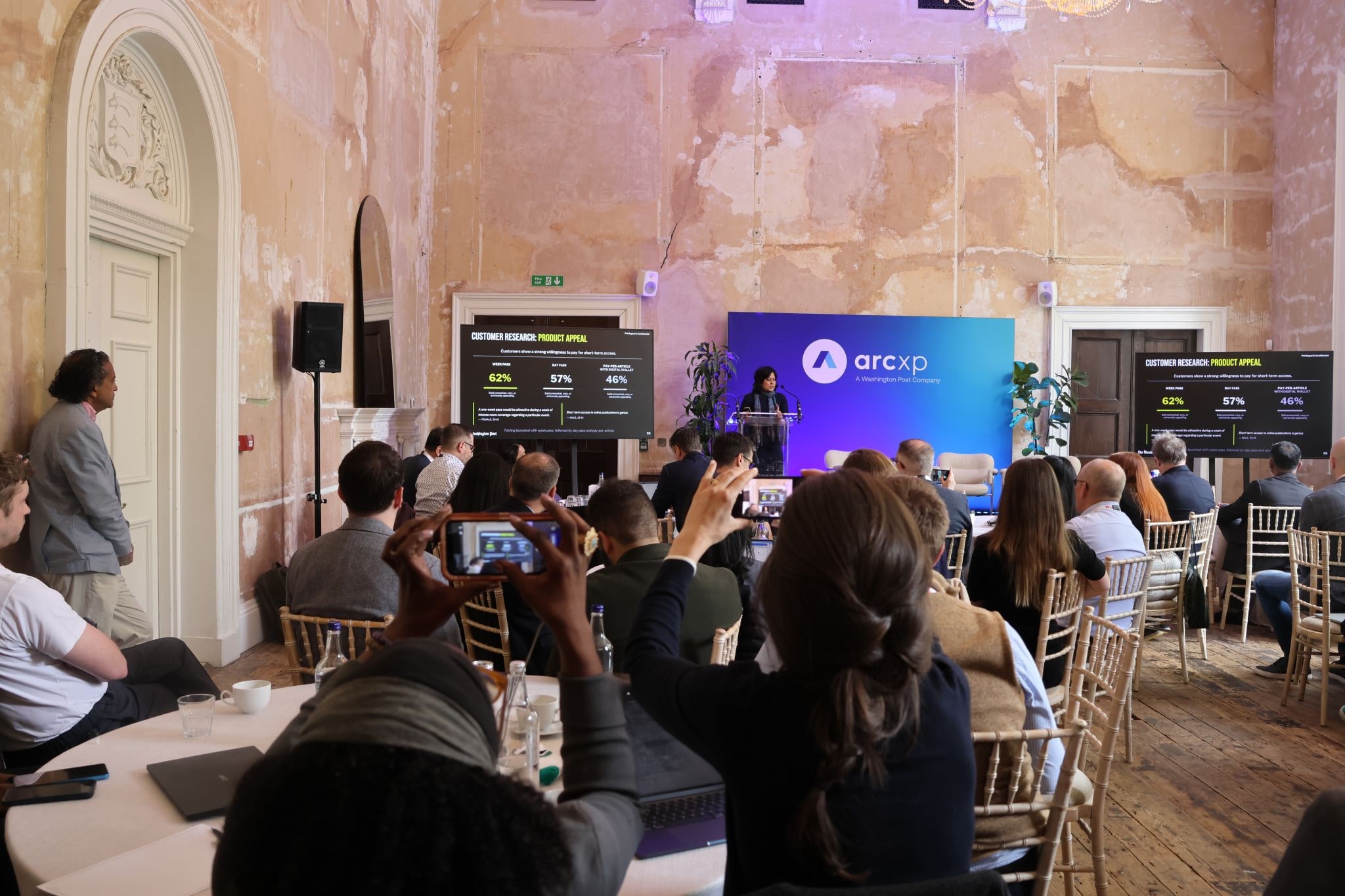
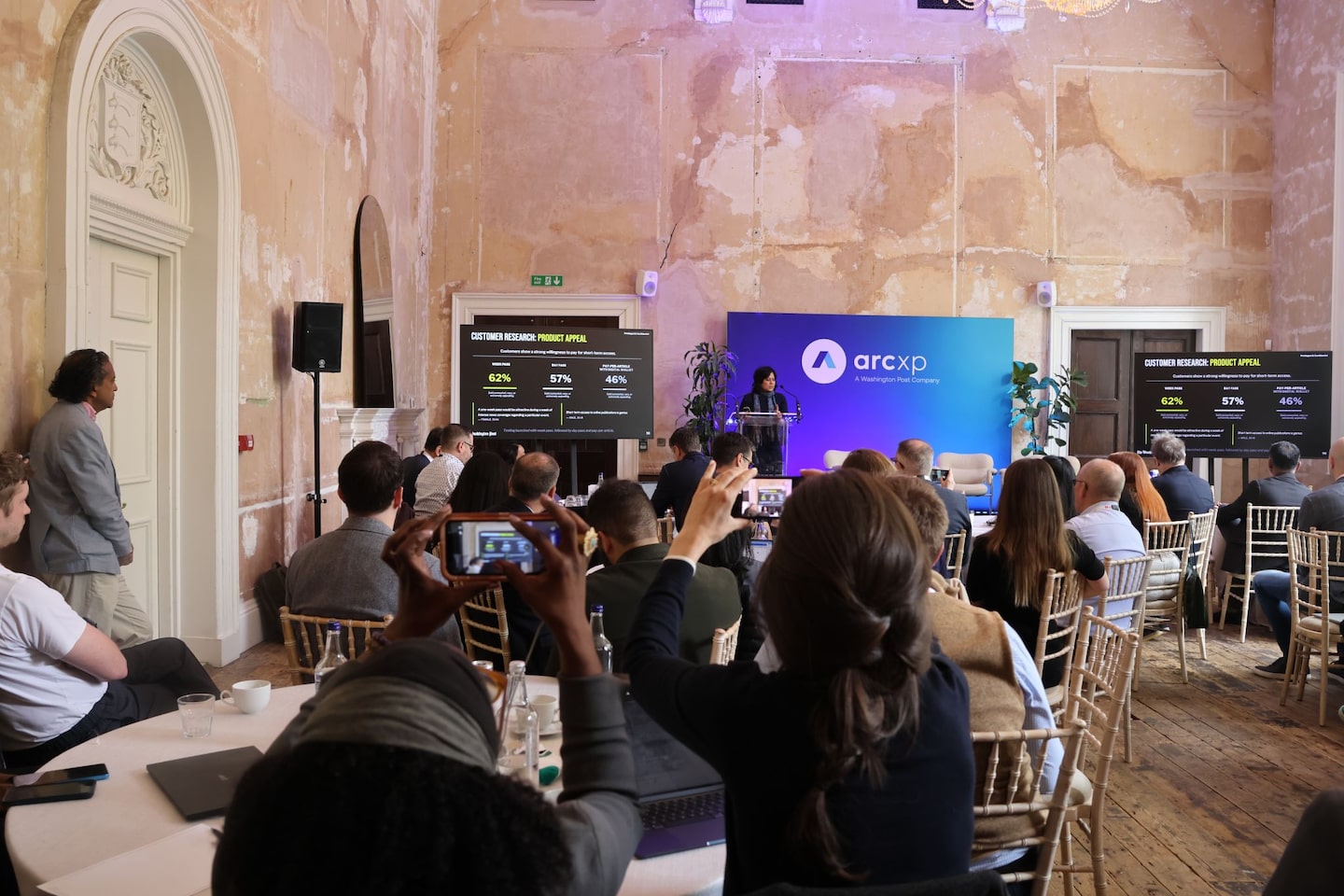
At Arc XP Connect London 2026, Anjali Iyer, Global Head of Subscriptions at The Washington Post, shared how the publication is reaching readers who may not be ready for a full subscription. Through Flexible Access, readers can purchase a single article or pay for access over a limited period, with subscriptions offered alongside those choices. Early results suggest these options are attracting new customers and giving some a path toward subscribing over time.
Give readers options that fit their needs
The Post’s research revealed a large audience for more flexible ways to pay. When they mapped out their total addressable market, the team identified 38 million people in the United States who were engaged with or interested in news. Of those, 19 million expressed interest in Flexible Access, and 12 million said they would pay for the right option.
When asked about specific products, 62% were interested in a week pass, particularly during major news events. Another 57% liked the idea of a day pass, and nearly half were interested in paying for a single article. These were survey responses, so the Post’s next step was to see whether that interest would lead to actual purchases.
Each option meets a different need. Someone following a developing story may want access for a week. Someone arriving through search may need only one article to answer a question. Giving each reader a relevant choice creates more opportunities to turn interest into revenue.
“They have a need and you’re meeting that need in the moment for what they want, and they’re willing to pay for it,” Iyer explained.
That distinction matters at the paywall. If a reader wants only one story, even a discounted subscription may feel like a larger commitment than they need.
Keep the value of a subscription clear
For subscription teams, offering shorter access raises an obvious concern: Will readers who might have subscribed choose a smaller purchase instead?
“Trust me, I’ve spent many sleepless nights dreaming about Flexible Access,” Iyer told the audience. “But, the answer for us is no.”
The team sees Flexible Access as a middle step for readers who are interested enough to pay but not ready to commit to a subscription. Previously, those readers faced a binary choice at the paywall: subscribe or leave. Many left without purchasing anything. Flexible Access adds another option, allowing them to pay for the article or period of access they want at that moment. In this way, it can serve as a bridge between a registered user and a subscriber.
That bridge is especially valuable as publishers look for new ways to build direct audience relationships. Changes in search and the rise of AI-generated answers are making it harder to attract readers through traditional discovery channels. When a new reader does arrive, a flexible offer gives the publisher another opportunity to turn that visit into a paying relationship.
The Post conducted more than 25 tests in the year before the presentation to understand how these offers affected subscriptions. In one test, readers could purchase a four-week pass for $4, $7, or $10. The team compared their behavior with that of a control group that saw only a subscription offer.
Flexible Access always appeared alongside a subscription, allowing readers to compare the choices while keeping the value of an ongoing subscription visible.
“We want to make sure that subscription remains the strongest value product,” Iyer said.
The Post had not seen Flexible Access take sales away from subscriptions. It also helped reduce short-term subscriber churn. Readers who wanted access for only a few days or weeks could buy a pass instead of subscribing and quickly canceling. This left the subscription business with more customers who genuinely wanted an ongoing relationship with the Post.
Publishers testing a similar approach should evaluate how flexible offers affect the entire paying audience. Are more visitors becoming customers? Are subscription sales holding steady? Are subscribers staying longer? Tracking those results alongside total revenue can show whether the added choices are creating a stronger path from occasional reader to long-term subscriber.
Learn who is buying and what they want to read
Flexible Access also gave the Post a clearer picture of the readers it was reaching. Iyer said 42% of buyers were completely new customers, while 33% had previously registered but never paid. The offers also brought back former subscribers who still wanted access to the Post’s journalism.
Many of these customers arrived through social media or search and visited on mobile devices. They showed strong interest in health, wellness, lifestyle, and archive stories. Political and opinion coverage attracted less interest, suggesting that Flexible Access was reaching an audience distinct from the Post’s core subscriber base.
For other publishers, this is a reason to examine the stories occasional readers seek out. Someone may be willing to pay for a useful health article or an older story discovered through search, even if they rarely visit the site. Understanding what readers buy and how they find it can help publishers decide where flexible offers are most likely to work.
This approach also provides a clearer view of which stories generate revenue. An archive article that answers a specific question could become a reader’s first purchase. By offering access to that story, the publisher can begin a paying relationship at the moment the reader sees its value.
See what happens after the first purchase
Some Flexible Access customers later became subscribers. At the time of the presentation, Iyer reported that 8% of week-pass buyers, 4% of day-pass buyers, and 3% of article buyers had upgraded to a subscription. Among those who upgraded, 13% chose the higher-priced premium plan.
These were still early results. The Post had less than three months of pay-per-article data and a longer history with week passes, so the conversion rates were not directly comparable. The upgrades also happened before the team had introduced targeted campaigns encouraging customers to purchase again or subscribe.
That creates an opportunity to learn what brings these readers back. Someone who bought a week pass during a major news event may value follow-up coverage. A reader who paid for a health article may be interested in related reporting. The first purchase gives the publisher a signal it can use to make future recommendations more relevant.
Iyer described pay-per-article as the Post’s most effective way to begin a paying relationship, citing the number of paying users it attracted and its strong retention rate among the Flexible Access options. That performance is worth considering alongside its lower subscription conversion rate. When assessing an offer, publishers can learn from repeat purchases and retention, not only subscription upgrades.
Make purchasing easy
The Post also focused on making the buying process straightforward. Iyer emphasized the importance of presenting clear choices and reducing friction at checkout so readers could quickly understand what they were purchasing and complete the transaction. The team was also testing different prices in the app because app users behaved differently from website visitors.
The Post’s experience gives publishers a practical starting point for expanding reader revenue. Understand what occasional readers are willing to buy, present the options clearly, and measure how those choices affect purchases, subscriptions, retention, and overall revenue.
A reader who pays for one story today may return for another or subscribe later. Giving that person a simple way to make the first purchase opens the door to a longer relationship.
Recent resources